

In 2025, 56% of candidates received no feedback after being rejected during screening or interviewing, while providing general or specific feedback was associated with a 50–75% increase in candidates' willingness to refer others. [1] Knowing how to give feedback to unsuccessful candidates comes down to two choices you make before anyone interviews. You decide how much detail each hiring stage gets and which scored criterion every reason must cite. This guide covers stage-by-stage depth, a seven-step scorecard workflow, US legal guardrails, and ready-to-send wording sorted by rejection reasons.
Interview Feedback to Unsuccessful Candidates
A standardized interview feedback process helps ensure that candidates are evaluated consistently and that hiring decisions are based on documented, job-related evidence. [3] Record the reasons for each decision in your applicant tracking system (ATS) so that feedback remains consistent across interviewers and reflects documented evidence rather than personal opinions.
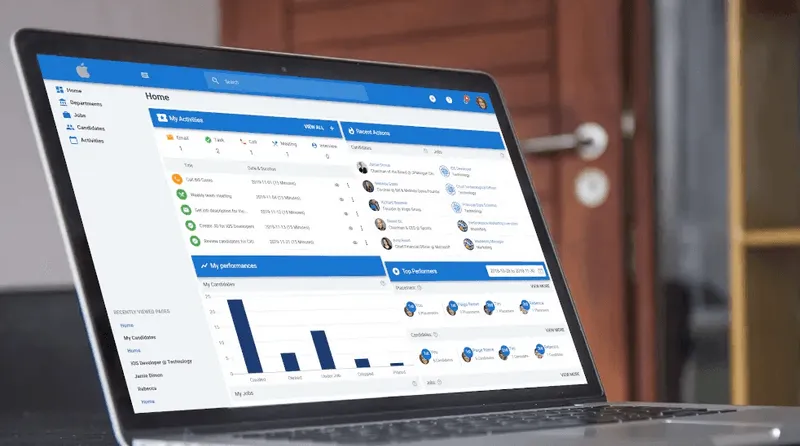
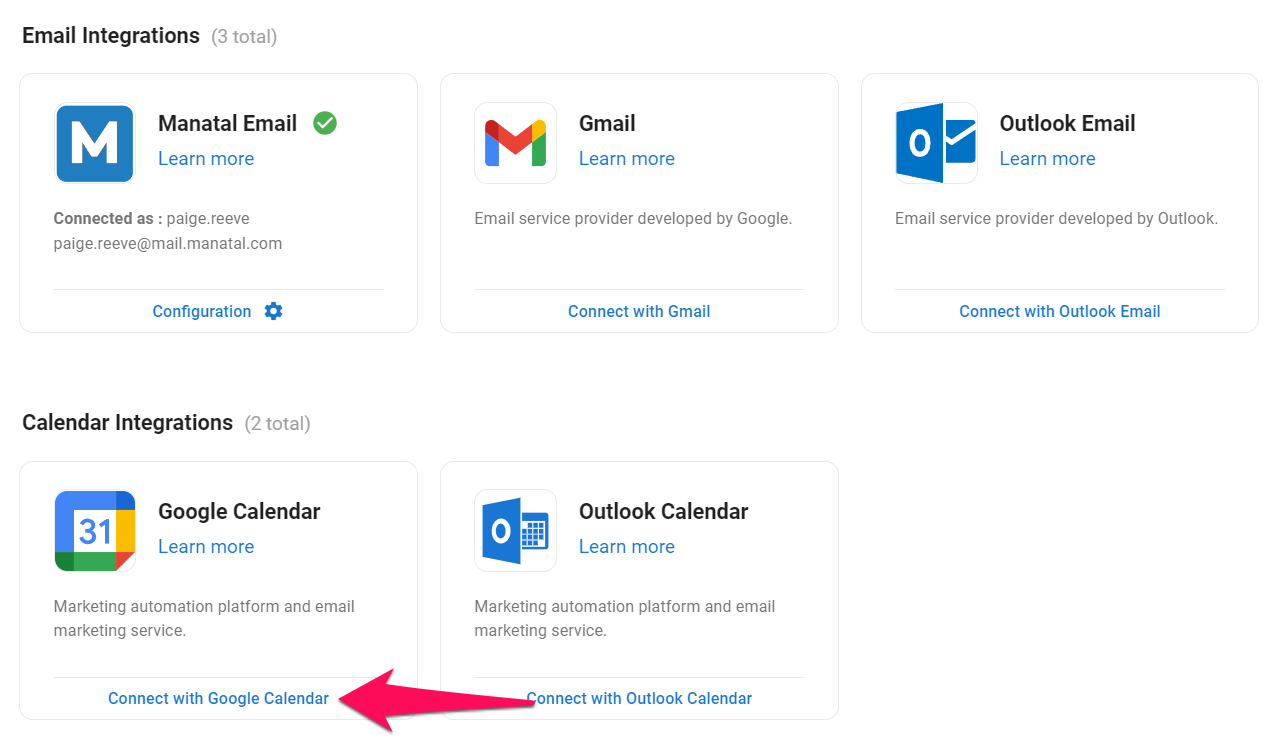
Start with an ATS such as Manatal to organize candidate records and interview notes. You can also use Manatal's Google Suite integration to support communication and scheduling workflows.
1. Record Evidence After the Interview Debrief
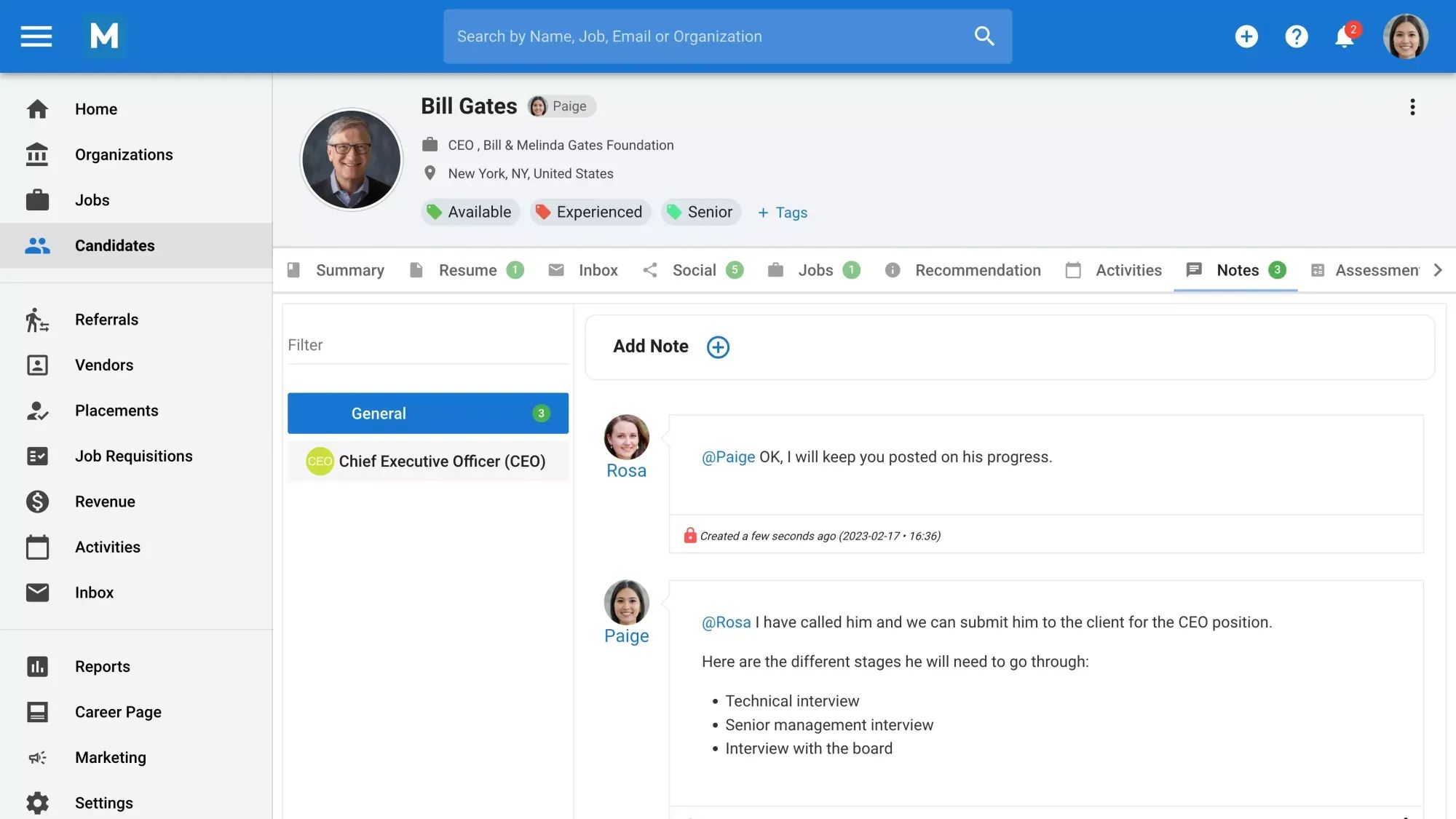
Document the decision and its supporting evidence within 24 hours of the interview debrief, while the discussion is still fresh. For example, write, "Scored 2/5 on SQL proficiency because the candidate could not complete a multi-table join during the technical exercise."
How to Do It: Record specific examples of each candidate's performance against the criteria, rather than relying on general impressions. Use Manatal AI Notetaker to automatically capture and transcribe key moments during the interview. Within 24 hours of the debrief, review the generated notes and transcript directly on the candidate’s profile to document the decision and supporting evidence while it’s fresh.
{{cta}}
2. Turn Evaluation Notes Into Constructive Feedback
Translate internal evaluation notes into clear, job-related feedback. Explain the criterion assessed, the evidence observed, and how the result relates to the role's requirements. Remove subjective opinions, comparisons to the successful candidate, and personality comments that are not relevant to job performance.
How to Do It: Use neutral, specific language, such as "Your response did not demonstrate the SQL skills required for this role," instead of "You were not technical enough." Keep the external feedback aligned with the documented evaluation and avoid including confidential interviewer discussions or information about other candidates.
3. Review Feedback Before Sending
Check the draft for accuracy, clarity, consistency, and compliance with applicable employment and privacy laws. For final-round candidates and internal applicants, consider having the hiring manager or HR review the message before it is sent.
How to Do It: Ask a second reviewer to confirm that the feedback is supported by interview evidence and relates directly to the job requirements. Use Manatal's Collaboration and Team Management features to support communication and coordination among hiring team members.
4. Send Feedback Within a Clear Timeframe
Send the message through the appropriate communication channel, following your organization's candidate communication policy. A target of one week after the final interview can serve as an internal service standard, provided it is communicated to candidates and applied consistently.
How to Do It: Tell candidates when they can expect an update, and notify them if the timeline changes. Use your email client and calendar tools to coordinate feedback calls when appropriate. Manatal's Google Calendar integration can support workflows.
Draft Feedback From Interview Data
Manatal's MCP Server connects recruitment data with AI tools such as ChatGPT, Claude, and Gemini. Recruiters can use their recruitment data to generate candidate summaries, analyze information, and draft personalized emails.
"Summarize [candidate]'s interview evaluations for [role] and draft a 120-word rejection email citing the lowest-scored criterion with one observed example and one strength. Don't mention other candidates or personal traits."
When the underlying candidate record contains structured evaluation data, recruiters can use that information as the basis for an AI-generated draft. A recruiter still reads every draft directly, checks it against the guardrails below, and edits it before anything is sent. For in-house HR teams, that review is also where the hiring manager confirms the reason matches the debrief.
How Much Feedback to Give at Each Hiring Stage
As candidates progress through the recruitment process, tailor feedback to the stage they have reached and the evidence available. Guidance from CIPD and Acas supports providing timely, consistent feedback based on job-related criteria, with the level of detail adjusted to the circumstances.
- Application or resume screening: Send a concise rejection message. Where appropriate, explain which essential job requirement was not met.
- Phone screening: Provide a brief, personalized explanation tied to the role's requirements.
- First or panel interview: Identify relevant strengths and areas where the candidate did not meet the assessment criteria.
- Final round: Consider offering a call for candidates who would benefit from a more detailed explanation, followed by a written summary where appropriate.
- Internal recruiting: Discuss the outcome with the hiring manager and, where useful, provide development feedback in line with internal HR policies.
- Agency or client roles: Confirm the feedback with the client before sharing it. Communicate job-related reasons accurately and check that the wording is appropriate and compliant with applicable laws.
Feedback Templates for Unsuccessful Candidates
These feedback templates for unsuccessful candidates are structured to state the rejection reason, highlight one specific strength, and offer constructive next steps where relevant. Simply replace the bracketed placeholders with criteria from your scorecard. The feedback templates below are tailored for each specific hiring stage:
More Direct Experience Needed for a Job Requirement
Thank you for interviewing for the [role] position. We won't be moving forward because the role needs more direct experience in [named requirement, e.g., managing enterprise renewals] than your background shows. Your [strength, e.g., account-planning walkthrough] was clear and well-structured, and we'd welcome your application for roles where that skill leads.
Missing a Specific Technical Skill (Phone Screen)
We've decided not to advance your application for [role]. The position requires hands-on Salesforce admin experience, such as [task, e.g., building validation rules], and that experience didn't come through in our call. Your reporting background is strong, so if you build Salesforce admin experience, we'd be glad to hear from you next time.
Assessment or Case Study Fell Short on a Scored Criterion (Final Round)
Thanks for completing the case study for [role]. We scored it on [criterion, e.g., roadmap prioritization], and the submission [observed evidence, e.g., didn't rank features by customer impact as the brief asked]. The customer research section was thorough and well-sourced, and that part of the work met the bar for the role.
Communication or Stakeholder Skills Below the Role's Requirement (Panel Interview)
After the panel for [role], we've decided not to move forward. The role requires presenting well-sourced data to non-technical stakeholders, and in the presentation exercise, [observed example, e.g., the sales team summary stayed at code level]. Your system design answers were precise, and we'd encourage you to apply again once you've led more cross-team presentations.
Role Filled Internally or Put on Hold (Any Stage)
I'm writing to let you know that we've [filled the [role] position internally / put the [role] position on hold]. The decision isn't related to your interviews, so there's no performance feedback to share. We would still value your [strength, e.g., experience scaling support operations], and I'll contact you directly if the role reopens.
Final-Round Runner-Up You Want to Re-Contact (Final Round)
You reached our final round for [role], and we've offered the position to another candidate. The deciding requirement was [criterion, e.g., direct ownership of a departmental budget], which your roles so far haven't included. Your [strength, e.g., vendor negotiation examples] scored well with every interviewer, and I'd like to contact you in [month] when we open [related role].
Internal Candidate (Development Note)
We appreciate you putting yourself forward for [role]. We've chosen not to move ahead because the role requires [criterion, e.g., experience leading a team budget], and your current position hasn't included that yet. Your [strength, e.g., coaching of new hires] is an asset, and [hiring manager] would like to build a development plan toward that requirement.
Legal Guardrails for Candidate Feedback
US federal law, enforced by the EEOC, prohibits employment decisions based on protected characteristics. Feedback that mentions those characteristics can suggest they influenced the decision. Keep every message on the scored, job-related reason, and follow these rules:
- Keep feedback focused on job-related qualifications rather than protected characteristics or personal circumstances.
- Do not reference age, race, religion, pregnancy, disability, national origin, or other protected characteristics as reasons for a hiring decision.
- Avoid comments about family plans or other personal circumstances that are unrelated to the job requirements.
- Do not use vague terms such as “culture fit” unless they refer to clearly defined, job-related behaviors or competencies.
- Avoid “too senior” or “overqualified” unless the reason is based on objective, job-related qualifications and has been reviewed appropriately. The EEOC has specifically identified “too senior” and “overqualified” as phrases that can sometimes mask age discrimination.
- Do not criticize an accent based simply on how it sounds. If communication ability is genuinely a job requirement, evaluate the candidate against the job-related communication standard and applicable law.
- Keep other candidates' information confidential and do not compare an unsuccessful candidate directly with another applicant.
- Document the job-related reason in accordance with your organization's recordkeeping and hiring policies.
This section is general guidance and isn't legal advice. Have employment counsel review and approve templates before your team uses them. Risky wording usually starts in interviewer notes, so addressing interviewer bias before the debrief leaves less to remove later.
Before and After: Rewriting a Scorecard Note
The rewrite keeps the scored criterion and the observed evidence. It drops "rambled," an opinion with no scored criterion behind it, and the comparison to another finalist.
- Before (internal scorecard note): "Weak on SQL joins, rambling. Seemed junior next to the other finalist."
- After (candidate-safe feedback): "The role requires writing multi-table SQL queries, and in the live exercise the join query wasn't completed in the time given. Your data modeling answers were detailed, and you explained your approach clearly."
Good feedback starts at the job description, not the rejection email. If a reason wasn't a scored criterion before the interview, it shouldn't appear in the feedback. Teams that define criteria up front write faster, safer, more specific feedback, because the reason is already in the ATS when the decision is made.
Conclusion
The rule for giving feedback to unsuccessful candidates comes down to two moves: match the depth to the stage and cite a pre-scored criterion. That rule decides whether a resume-screen applicant gets one line or a finalist gets a call. It also keeps each message tied to the job instead of to an interviewer's impression. Set up your scorecards before the first interview, log the reason within 24 hours of the debrief, and have a person review every draft. Manatal holds the scorecards, and AI Data Chat drafts feedback based on them for your team to approve.
Try it on your next open role: Start a 14-day free trial.
Frequently Asked Questions
Q: What to say to an unsuccessful candidate?
A: When learning how to give feedback to unsuccessful candidates, structure your message clearly by stating the decision, one job-related reason, and one genuine strength, in that precise order. Keep the overall communication concise and under 150 words to maintain clarity and professionalism. To ensure accuracy, draft and review your rejection emails in Manatal ATS, matching each reason directly to the pre-scored criteria in the candidate’s scorecard.
Q: How to politely tell a candidate that they were not selected?
A: Begin by thanking them for the time and effort they invested in your recruitment process, then state the decision directly and respectfully: "We won't be moving forward with your application." Understanding how to give interview feedback to unsuccessful candidates requires following up with one clear, job-related reason based on your evaluation notes. You can leverage Manatal's email templates to automate these polite rejection notices while customizing the specific feedback point, using phrases like "at this time" only if you genuinely intend to reconsider them for future openings.
Q: Should you give feedback to every unsuccessful candidate?
A: Providing feedback to everyone who completes an interview is essential for maintaining a positive employer brand and candidate experience. Applicants screened out at the initial resume stage should receive a brief note specifying the unmet requirement. For standardized communications, Manatal's Mass Emailing feature can support template-based campaigns, subject to your organization's communication policy and the feature's configuration requirements.
Q: How do you inform unsuccessful interview candidates?
A: Match your communication channel and depth to the hiring stage: arrange a 10-15-minute feedback call for final-round candidates and send a personalized email for earlier interview stages. Ensure messages are dispatched within the timeline promised to the candidate. By managing your interview schedule through Manatal's Google Calendar and Outlook integrations
Citations: