





Organizations without a recruitment plan waste time reopening searches, misaligning on candidates, and making offers that fall through. A structured hiring process fixes that, reducing time-to-hire and recruiting spend before the first résumé lands. This guide covers the key steps, a practical recruitment plan example, a ready-to-use template, and three real-world examples you can adapt today.
Recruitment Plan Example: Key Elements
An effective recruitment plan example is built on five elements: a defined role scorecard, sourcing channels matched to the candidate profile, a structured interview framework, a timeline with assigned owners, and an approved offer range, all decided before the search begins.What separates a strong sample recruitment plan from a weak one is specificity. A generic hiring plan example lists steps. An effective recruitment strategy plan locks in decisions: who approves the job description, which channels launch first, and what a disqualifying answer looks like in screening. That's what makes it a guide your team can actually follow, not just a document that sits in a folder.
Recruitment Plan: Step-by-Step
Step 1: Define the Role
Start with the hiring manager, not HR. Obtain a written answer to three questions: What does success look like at 90 days? What skills are non-negotiable versus trainable? And why is this role open now? Document those answers. They become your hiring criteria and prevent scope creep when the first "good enough" candidate walks in.
- How to do it: Schedule a 30-minute intake meeting with the hiring manager before anything else. Use a shared Google Doc or Notion page to capture answers in real time. Ask them to rank required skills from must-have to nice-to-have on a scale of 1 to 3. If the hiring manager lists a skill as a must-have, but qualified candidates' resumes don't include it, remove it before posting.
- Tools to use: Google Docs or Notion for intake notes, Manatal's job creation form to structure the requisition directly in your ATS.
- Output: A completed job requisition with required skills, experience range, and reporting structure.
.webp)
{{cta}}
Step 2: Set Headcount GoalsMap the role against current team capacity and the upcoming quarter's business targets. If you are backfilling a departure, determine whether the original job description still fits the team's direction. If it does not, fix it before you post anything.
- How to do it: Pull the team's current org chart and identify any coverage gaps the new hire is meant to address. Run a quick workforce planning check: compare the team's current output against the targets for the next two quarters and quantify the gap. If the role cannot be tied to a specific output gap, the business case for the hire is weak, and Finance will push back.
- Tools to use: Your company's HRIS system for headcount data, a simple Google Sheet to map capacity versus output targets, and a formal headcount request form submitted to Finance for sign-off.
- Output: Confirmed headcount approval from Finance or the relevant budget holder.
Step 3: Define the Candidate Profile
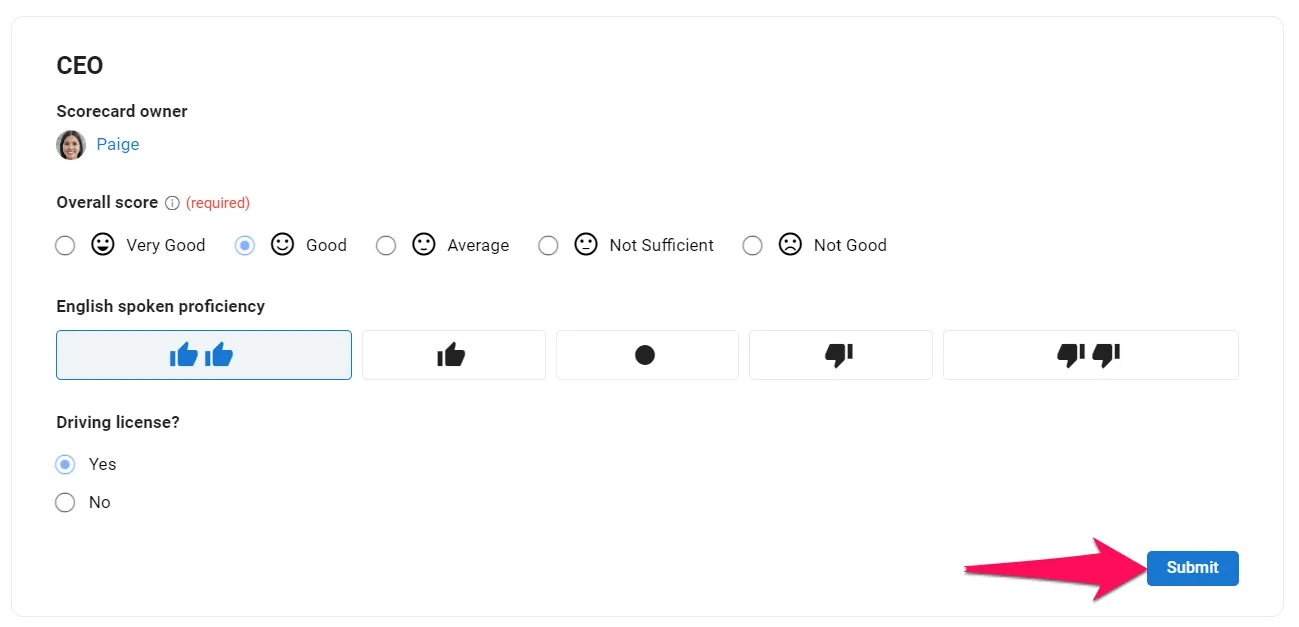
Write a recruiting scorecard, not a job description. A scorecard lists four to six measurable outcomes the hire needs to achieve. A job description lists activities. Scorecards lead to better hires because interviewers assess candidates against concrete benchmarks rather than vibes.
- How to do it: Open a new doc and write the sentence. "In their first 90 days, this person will..." and complete it with four to six specific, measurable deliverables. Then list the skills required to produce those deliverables. Weight each skill by importance from 1 to 5. Share the draft with the hiring manager and at least one peer who has done the role before. Their edits will catch blind spots before they lead to bad hiring decisions.
- Tools to use: A Google Sheets scorecard template shared with the hiring panel, or Manatal's custom candidate fields to embed scoring criteria directly into each candidate profile.
- Output: A candidate scorecard with weighted criteria for evaluation.
Step 4: Set the Recruitment Budget
Break the budget into specific line items: job board advertising costs, assessment tool fees, agency fees if applicable, recruiter hours, and onboarding costs. Track cost-per-hire by sourcing channels. If LinkedIn Recruiter costs you $400 per qualified applicant and employee referrals cost $50, that is a budget decision hiding in plain sight.
- How to do it: Build a simple budget tracker with five columns: channel name, estimated cost, actual spend, number of qualified applicants generated, and cost-per-qualified-applicant. Update it weekly throughout the search. After the hire closes, archive it. After three hires, you will have enough data to cut your lowest-performing channel and reallocate that spend to what actually works.
- Tools to use: a Google Sheet budget tracker and Manatal's reports and analytics dashboard to pull applicant volume by source automatically.
- Output: A signed budget allocation with channel-by-channel cost estimates.
.webp)
Step 5: Choose Your Sourcing Channels
Map your sourcing channels to where your specific candidate type actually spends time. A senior data engineer is on GitHub, reading engineering blogs, or attending a local meetup. A retail store manager candidate is probably on Indeed. Match the channel to the person.
- How to do it: List the last five people hired into similar roles and ask each of them where they were when they heard about their current job. That answer is your sourcing intelligence. Cross-reference it with channel cost data from Step 4. Then rank your channels by expected yield of qualified applicants per dollar spent, not by familiarity.
- Tools to use: Manatal's job board multiposting to distribute across 2,500+ free and premium job boards from a single submission, including Indeed, LinkedIn, Monster, ZipRecruiter, SEEK, JobsDB, and regional boards across Asia, MENA, and Europe. No need to log into each platform separately.
- Output: A prioritized list of sourcing channels with budgets assigned per channel.
.webp)
.webp)
Step 6: Write the Job Posting
Write for the candidate you want, not for the role you are filling. Candidates read job postings the same way they read product listings: they scan for reasons to apply or to skip. Lead with what makes the role compelling. Salary range, growth opportunity, and work arrangement go at the top. Laundry lists of requirements go at the bottom.
- How to do it: Write two drafts. The first is the internal job description for HR files. The second is the external job ad for candidates. They are not the same document. The external version leads with the value proposition: what the candidate gets, what problem they will solve, and what success looks like. Keep it under 600 words. Anything longer, and qualified candidates stop reading before they reach the apply button. Have the hiring manager review for accuracy, not for tone.
- Tools to use: Manatal's AI job description generator to produce a first draft, then edit for voice and specifics. Use the Hemingway App to trim passive sentences before posting.
- Output: A finalized job posting approved by the hiring manager.
Step 7: Build a Talent Pipeline
A good candidate sourcing strategy does not wait for applicants. It identifies passive candidates and begins building relationships before a vacancy exists. Export your ATS's existing candidate database and search it first. You may have already interviewed someone qualified for this role six months ago who was not the right fit then but would be now.
- How to do it: Search your ATS for candidates who reached stage 2 or 3 of a previous similar search but did not receive an offer. Reach out with a personalized two-sentence message referencing your previous conversation. Response rates on warm re-engagement outreach are typically significantly higher than cold outreach, often 3x or more in practice, with warm outreach achieving 15-25% response rates compared to 1-8% for cold outreach, depending on personalization and targeting. [1]
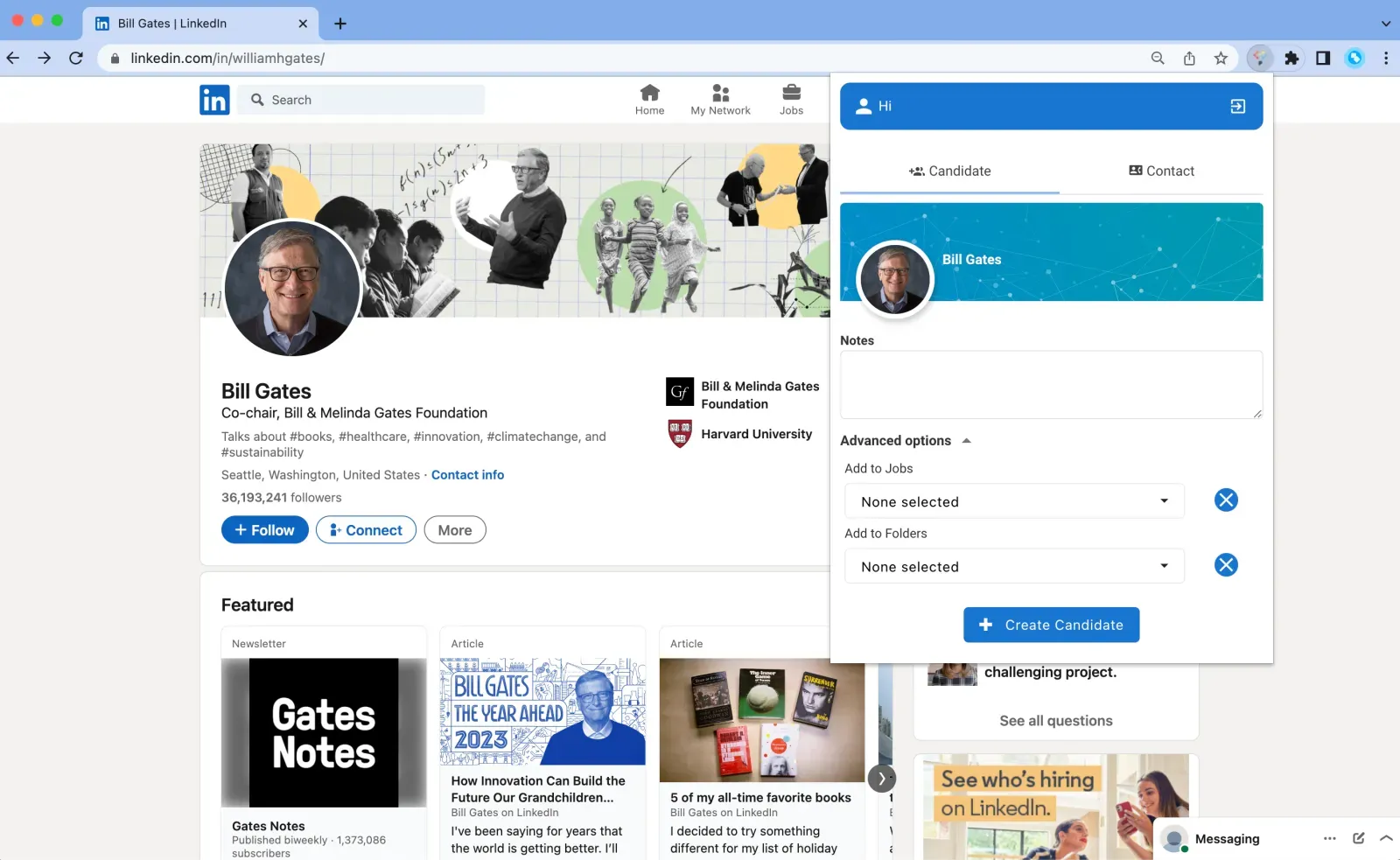
- Tools to use: Manatal's Sourcing Hub, which gives access to over 700 million professional profiles without leaving the platform. The People-Match AI Chrome extension captures candidate profiles from LinkedIn, GitHub, Indeed, SEEK, Xing, and more directly into your ATS in one click. The built-in contact discovery feature retrieves verified email addresses and phone numbers on demand.
- Output: A shortlist of 15 to 20 passive candidates identified through proactive outreach.
Step 8: Standardize Your Interview Process
Define the interview stages before the first candidate applies. Decide who conducts each round, what each stage is designed to assess, and how long the process should take end-to-end. Standardize your questions. Asking every candidate the same behavioral questions is not just efficient; it's also effective. It is legally defensible. It keeps you EEO-compliant and eliminates inconsistencies that lead to biased decisions.
- How to do it: Map each interview stage to a specific section of the scorecard from Step 3. Stage one covers baseline experience and motivation. Stage two covers role-specific technical competency. Stage three covers leadership and team dynamics. Write five behavioral interview questions per stage using the STAR format (Situation, Task, Action, Result). Distribute the question sets to interviewers before the first candidate is scheduled. No improvising during interviews.
- Tools to use: A shared Google Doc interview guide distributed to each panel member, Manatal's collaboration and team management features to assign interviewers to specific pipeline stages, and to centralize feedback in one place.
- Output: An interview guide with stage-by-stage question sets and evaluation rubrics.
Step 9: Screen Applicants
Screen against the scorecard, not the resume format. A well-formatted resume and a qualified candidate are not the same thing. Use your predetermined criteria to assess the first 20 applicants, then calibrate. If you are advancing 80% of applicants to a phone screen, your criteria are too loose. If you are advancing 5%, your sourcing is off.
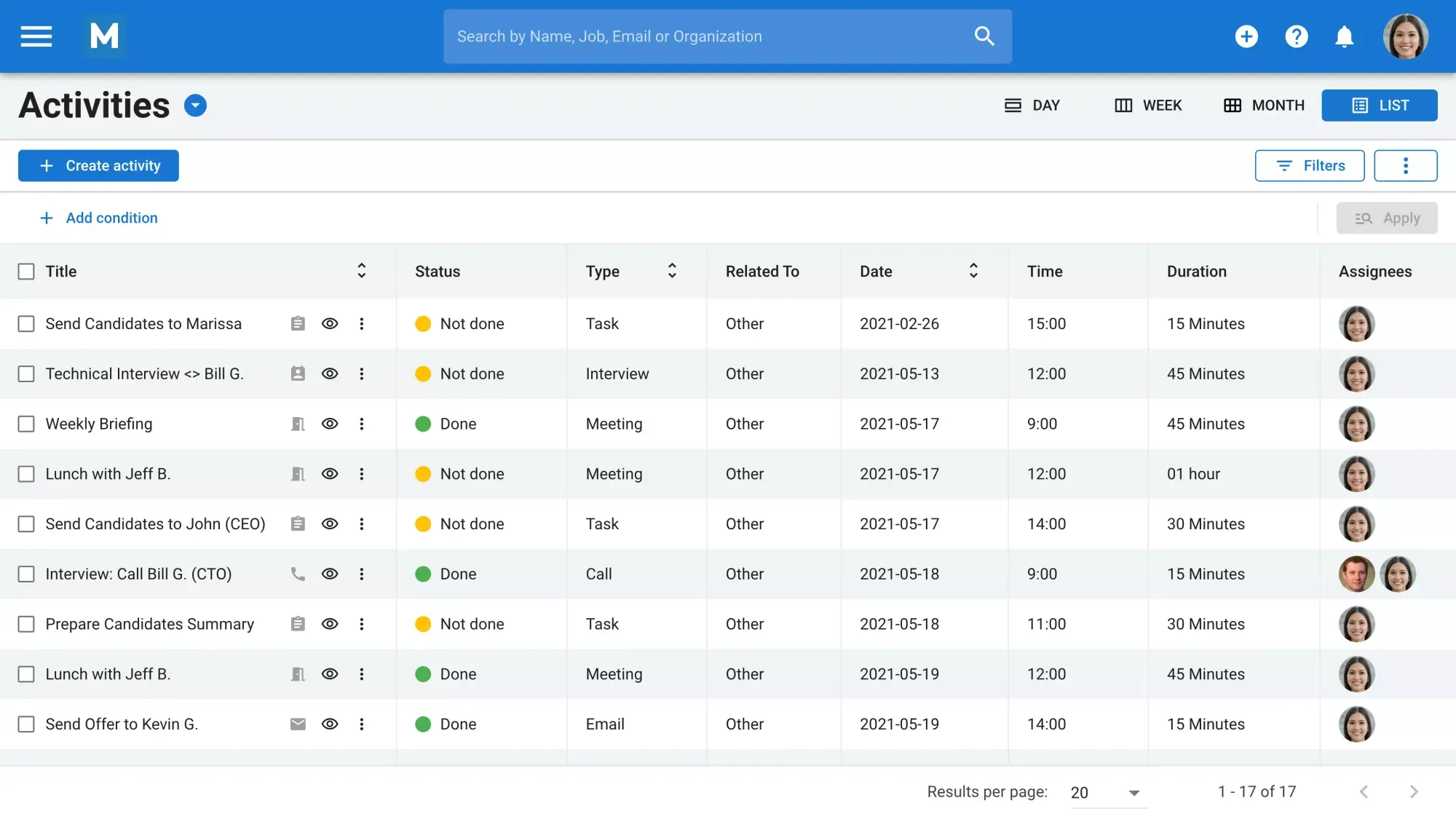
- How to do it: Set your ATS to auto-score incoming resumes against the criteria defined in Step 3. Review the top 20 scored profiles manually to validate that the AI ranking aligns with your judgment. If it does not, adjust the scoring weights before you process the next batch. Use a standard 15-minute phone screen to verify the three most critical must-have criteria before investing time in a full interview.
- Tools to use: Manatal's AI resume scoring and AI recommendations to surface the most qualified applicants automatically. Manatal's AI Interviewer conducts initial structured video screens in six languages, 24 hours a day, so your team meets only candidates who have already cleared the baseline criteria.
- Output: A shortlist of candidates advancing to the first interview round.
Step 10: Conduct Structured Interviews
Each interviewer covers a defined section of the scorecard. No one asks duplicate or illegal interview questions. Debrief within 24 hours while the recall is fresh. Document scores numerically so you can compare candidates objectively instead of arguing about impressions.
- How to do it: Send each interviewer their assigned set of questions and the candidate's scorecard 24 hours before the interview. After each session, each interviewer submits a numerical score per criterion on the same day. Hold a 20-minute panel debrief where each person states their score and one specific piece of evidence before discussing overall impressions.
- Tools to use: Manatal's collaboration and hiring manager portal to share candidate profiles, collect feedback scores, and centralize approvals without email threads.
- Output: Completed scorecards for every candidate who reaches the interview stage.

Step 11: Make the Offer
Have the offer terms agreed upon with the hiring manager and Finance before you call the finalist. Candidates who receive a verbal offer and then wait a week for the written version frequently drop out or use it as leverage with a counteroffer elsewhere. Speed at the offer stage is not courtesy. It is a strategy.
- How to do it: Before the final interview, get pre-approval on a salary range, signing bonus flexibility, and any variable compensation components. The moment the panel confirms the finalist, call within 24 hours with the verbal offer. Send the written offer letter the same day. Target a 48-hour window between verbal offer and signed letter. Any longer and your offer acceptance rate will decline.
- Tools to use: Manatal's job offer email templates to generate and send documents directly from the platform, cutting the time from decision to delivery to under an hour.
- Output: A signed offer letter with a clear start date and compensation breakdown.
Step 12: Onboard Strategically
Your recruitment plan does not end when the candidate signs. The first 30 days determine whether a hire becomes a contributor or a regret. Assign a specific onboarding buddy. Schedule week-one check-ins with the hiring manager. Define what the first 30, 60, and 90 days should produce.
- How to do it: Build a 90-day onboarding doc before the candidate's first day, not after. Week one covers systems access, team introductions, and company orientation. Weeks two through four cover role-specific training and the first small deliverable. Days 30 to 60 cover independent execution with feedback loops. Days 60 to 90 cover full ownership of core responsibilities. Deliver this document to the new hire on day one. Review it together at the 30-day mark.
- Tools to use: Notion or Confluence for the 90-day onboarding plan, Manatal to track the hire through the final pipeline stage, and generate post-hire reporting on time-to-fill and source-of-hire.
- Output: A written 90-day onboarding plan delivered on the employee's first day.
Recruitment Plan Template
A structured recruitment plan template prevents misaligned hires, wasted sourcing spend, and searches that stall mid-process. Copy and paste this table into your internal wiki, Notion, or Google Sheets to start building your hiring plan immediately.
DEFINE & PLAN
SOURCE & ATTRACT
SCREEN & ENGAGE
OFFER & ONBOARD
For organizations seeking a detailed strategic recruitment plan template, further information and a downloadable PDF file are available from the Partnership for Public Service.
Moving From Static Planning to Active Execution
While a template is the perfect foundation for organizing your thoughts, static spreadsheets often crumble under the weight of high-volume applications and manual follow-ups. A plan is only as effective as the tools you use to run it.
To truly scale your hiring, you need a system that breathes life into your strategy. Manatal’s ATS bridges the gap between a "plan on paper" and a "hire in the building" by turning manual tasks into automated workflows:
- Build Your Custom Pipeline: Instantly map our 12-step framework into a visual, drag-and-drop recruitment pipeline.
- Automate the Mundane: Let AI screen resumes and trigger automated emails, ensuring no candidate falls through the cracks.
- Centralize Collaboration: Move away from messy email threads by centralizing feedback and approvals between HR and department heads in one place.
3 Practical Recruitment Plan Examples
Here is how the same 12-step framework adapts across three completely different hiring scenarios, drawn from real-world case studies of leading companies.
Example 1: High-Volume Seasonal Hire (Walmart)
Walmart, operating more than 4,600 U.S. stores, faces massive seasonal hiring surges every holiday period, combined with high turnover in hourly roles. During peak seasons, the company must rapidly onboard thousands of seasonal associates while managing tens of thousands of applications.
- The Adjustments: Instead of relying solely on traditional mass postings, Walmart implemented AI-powered automation. The process starts with an instant AI review of applications for location, shift availability, and basic qualifications. Qualified candidates receive automated text/voice conversations to confirm details and answer FAQs on pay and benefits. Scheduling happens automatically, moving candidates to manager interviews within hours. Recruiters shift focus from repetitive screening to final interviews and onboarding. The company also prioritizes offering extra hours to current team members before adding new seasonal staff. [2]
- Timeline: Many candidates complete the entire process, from application to offer, in under 24 hours. Overall time-to-hire dropped by more than 50%.
- Key Metric: Dramatically reduced recruiter workload (saving over 100 manual screening hours per recruiter per month); lower candidate drop-off; and improved diversity through standardized, bias-reduced early screening.
Example 2: Specialized Tech Hire (Monzo, UK Fintech)
Monzo, a fast-growing digital bank, regularly hires backend engineers in a highly competitive fintech talent market where candidates have multiple offers and expect a transparent, skills-focused process.
- The Adjustments: Active sourcing dominates over passive job boards. Recruiters reach out directly via LinkedIn and other platforms with personalized messages referencing the candidate’s specific work or contributions. The interview process is strictly structured into four engineer-led stages: (1) Initial call with a recruiter or engineering manager, (2) take-home exercise or live pair-coding session, (3) systems design interview, and (4) behavioral interview focusing on real past projects using the STAR format. Every stage has clear decision gates, and all questions are standardized to assess both technical depth and cultural fit. No stages are added mid-process, and salary ranges are pre-approved internally to enable fast offers. [3]
- Timeline: Typically 4–6 weeks from initial outreach to offer, keeping pace with the competitive market.
- Key Metric: High offer acceptance rates and strong quality of hire, as the process is transparent and candidate-centric, reducing ghosting and ensuring engineers see real day-to-day work at Monzo.
Example 3: Leadership Hire (Confidential Succession Case)
A mid-sized logistics/operations company needs to replace its director of operations. The hire must remain fully confidential because the incumbent has not yet been informed, and any public signal could affect client relationships or internal morale.
- The Adjustments: No public job postings or advertisements are used. The process relies entirely on targeted outreach and professional network referrals. Recruiters build a confidential target list of 30–40 executives currently in similar roles at comparable companies. Initial outreach is highly personalized and discreet; the role is described without naming the company. Interested candidates sign an NDA before receiving full details. The interview process involves five stages with multiple stakeholders: (1) Confidential recruiter call, (2) meeting with the CHRO, (3) working session with the current operations team, (4) presentation to the executive team, and (5) final conversation with the CEO. Each stage includes a formal debrief. Reference checks are conducted proactively (minimum three professional references, contacted directly) before any offer is extended. [4]
- Timeline: 16–22 weeks from initial mandate to start date.
- Key Metric: Emphasis on cultural and strategic alignment (scored by the executive panel), because a bad executive hire in this role typically costs 2–3× the annual salary in lost productivity and disruption.
Conclusion
In conclusion, a well-structured recruitment plan provides a strong foundation for building a high-performing team. Top brands like Walmart and Monzo demonstrate that strategic recruitment is essential for attracting and retaining top talent. Leverage employer branding, technology, and data-driven decisions to optimize your hiring efforts and stay competitive. Now’s the time to activate your recruitment strategy and hire smarter.
Start your 14-day free trial of Manatal and build your first recruitment pipeline today.
Frequently Asked Questions
Q: What is the difference between a recruitment strategy plan and a recruitment plan?
A: A recruitment strategy plan defines the long-term approach your organization takes to building talent pipelines, employer branding, and workforce planning across multiple roles and time horizons. Think of it as the annual playbook. A recruitment plan, or hiring plan, example at the individual role level is the tactical execution document for a single open position: who you are hiring, where you will find them, what it will cost, and when it needs to be done. You need both. The strategy plan sets the direction; the individual recruitment plan example is where the actual hiring happens.
Q: How long should a recruitment plan take to complete before posting a job?
A: For a standard professional role, a well-run recruitment plan takes three to five business days to finalize before the job goes live. That time covers the intake meeting with the hiring manager, scorecard creation, budget sign-off, sourcing channel selection, and job posting approval. Rushing this phase to post faster is the single most common cause of a bad hire. Five days of preparation save four to six weeks of interviewing the wrong people.
Q: What is a sample recruitment plan for a company that has never formalized its hiring process before?
A: Start with the simplest possible version. A sample recruitment plan for a first-time formalizer needs four components: a one-page job scorecard with five measurable hiring criteria, a sourcing plan covering two to three specific channels and corresponding budgets, a three-stage interview structure with assigned interviewers for each stage, and a written offer and onboarding checklist. Do not attempt to implement all 12 steps at once. Get the scorecard and the interview structure right first. Those two changes alone will produce a measurably better hiring outcome within the first two searches.
Q: How does a recruitment strategy example change depending on the size of the company?
A: A recruitment strategy example for a 20-person startup looks nothing like one for a 2,000-person enterprise. Small companies hire for cultural contribution and raw capability because the role will evolve. Their recruitment strategy example prioritizes speed, broad sourcing, and founder-led final interviews. Enterprise companies hire for defined competencies within structured teams. Their example of recruitment plan execution involves more stakeholders, longer timelines, formal approval gates, and compliance documentation. The 12-step framework in this guide applies to both, but the weight given to each step shifts significantly based on organizational scale and hiring volume.
Q: Which metrics should a hiring plan example always track to measure success?
A: Every hiring plan example should track at least four metrics. Time-to-fill measures the number of days from job requisition approval to signed offer letter; the benchmark for professional roles sits around 36 to 42 days. Cost-per-hire calculates total recruitment spend divided by the number of hires; breaking this down by sourcing channel shows you where your budget is actually working. Offer acceptance rate reveals whether your compensation and process are competitive; anything below 70% signals a problem with either the package or the candidate experience. Quality of hire, measured at the 90-day performance review, is the hardest to track but the most important. It is the only metric that tells you whether the plan actually produced a good hire, not just a fast one.
Citations:
.webp)







.webp)

.webp)


.webp)


